Art Studio at Sunset
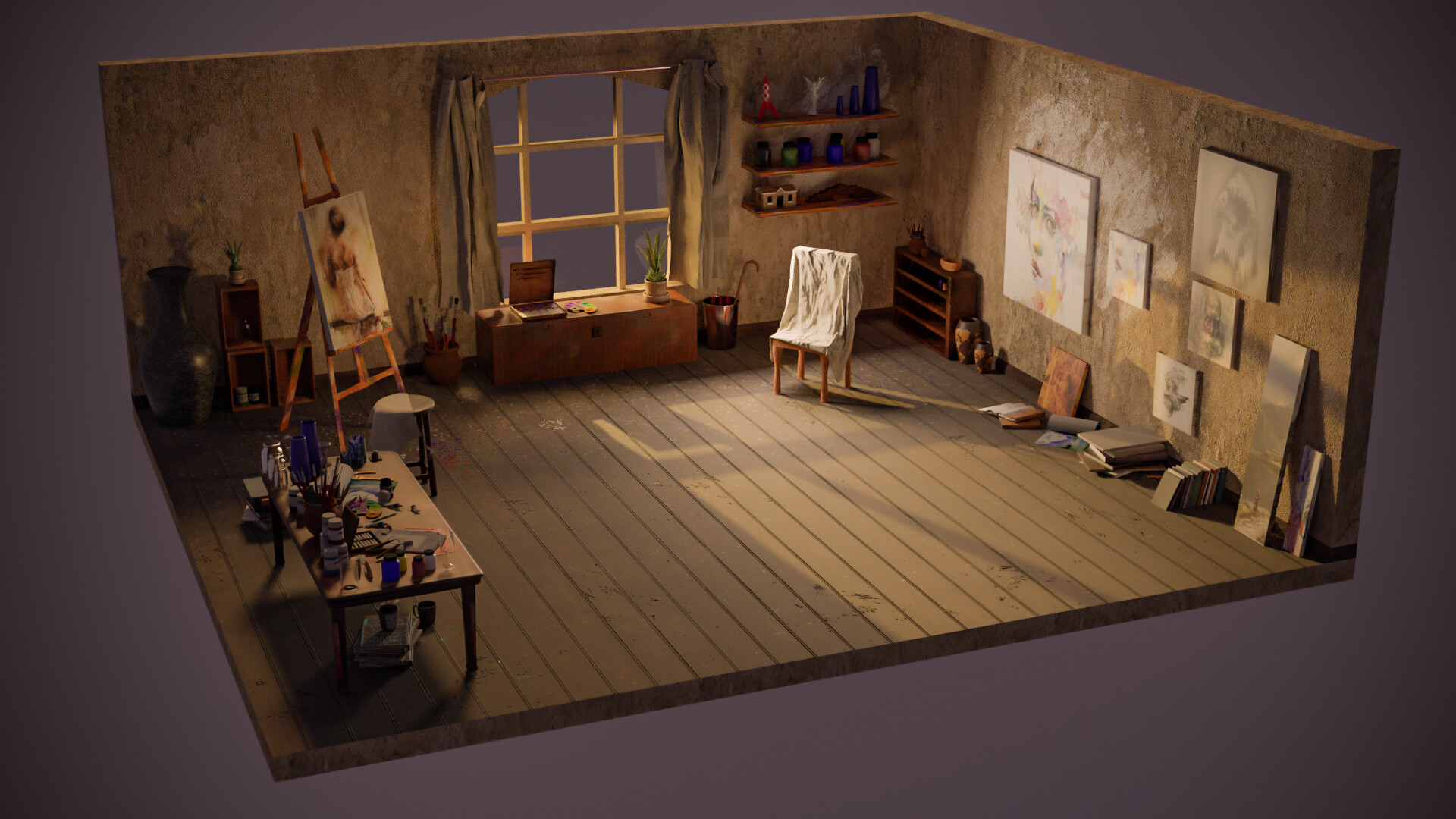
Art Studio

Art Studio - Clay version
An art Studio with rays of warm light that cast a subtle yellow tone.
Scene composition and working with colour is not an easy thing at times, but aside from using reference images, sketches or video, one of the effective ways I have found in helping to decipher what colours or scene composition I should use, is by working with the 'Sherlock Holmes' method.
This actually comes from fiction writing and the "show, don't tell" concept, but it also works really well when creating scenes. So for example, I want a scene to be at sunset - but then how will I or the view know it's at sunset? This will be through a process of deduction (this approach can be of more help in cases where there is complex subject matter - as this is just an example that may not require such an approach) and helps focus the work that's to be produced:
- So if Holmes were here and I asked him how does he know this is at sunset. - He would say it's at sunset because of the position of the sun and the tones and shadows it casts. Certain times of the day means that the rays of light shine through the atmosphere at different angles and this creates different shades of colour.
Then he could go deeper and deeper into detail if necessary. This approach I would take if I am having some difficulty in setting the scene and I would proceed to ask myself questions about "how I do know" and these act as a great guide for setting the scene or evoking emotions I am looking to evoke.
Obviously, there are other considerations, e.g. using a specific style or theme, starting out with sketches, having a strong subject of focus in the scene, the rule of thirds, studying the old masters, and so forth. But this tool can be pretty useful in deciphering these elements.
This scene is all created in Blender and is also the first time I have used Substance painter - which I used for texturing the walls and floor.